Loud-ESP32-Plus 
What is it?
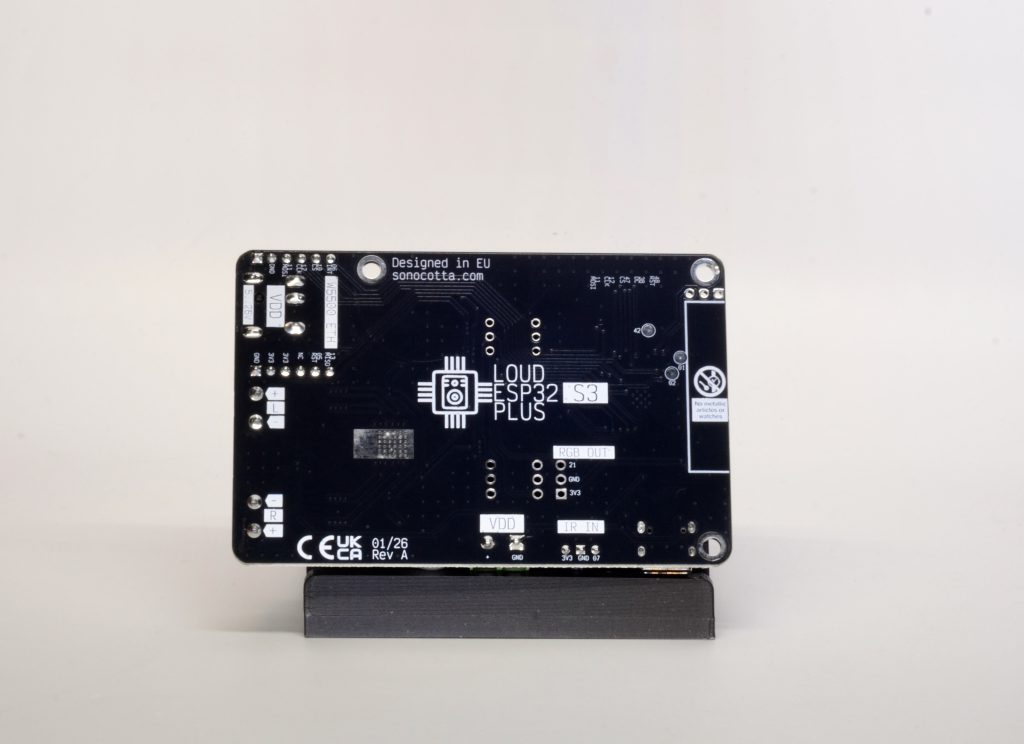
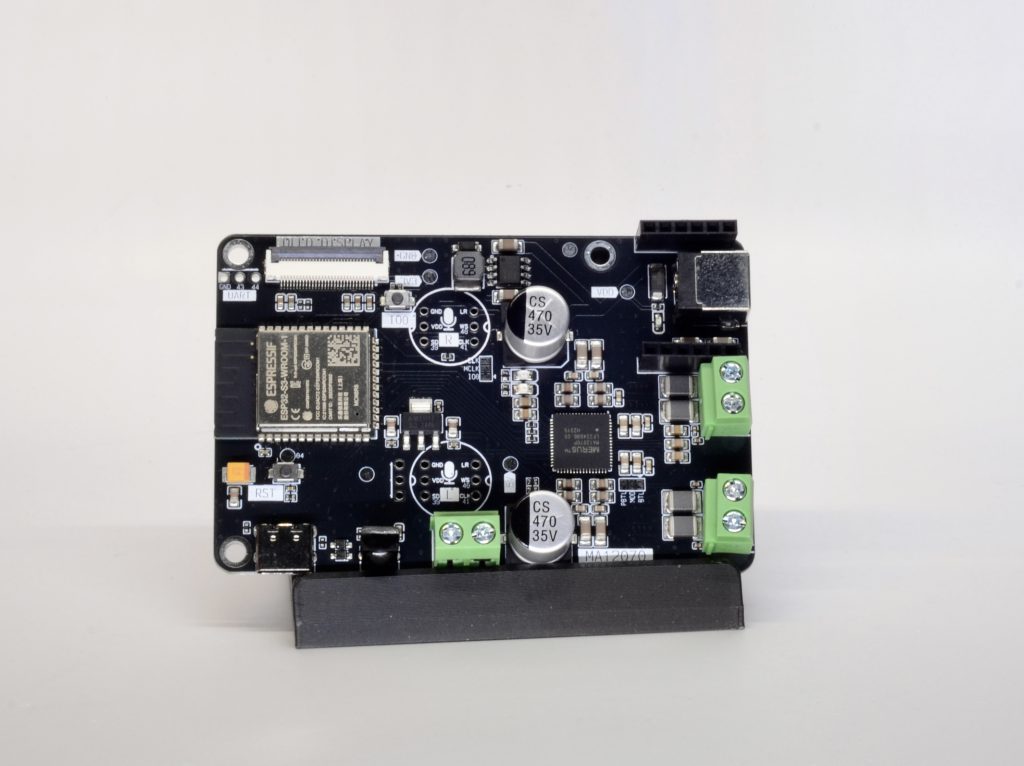
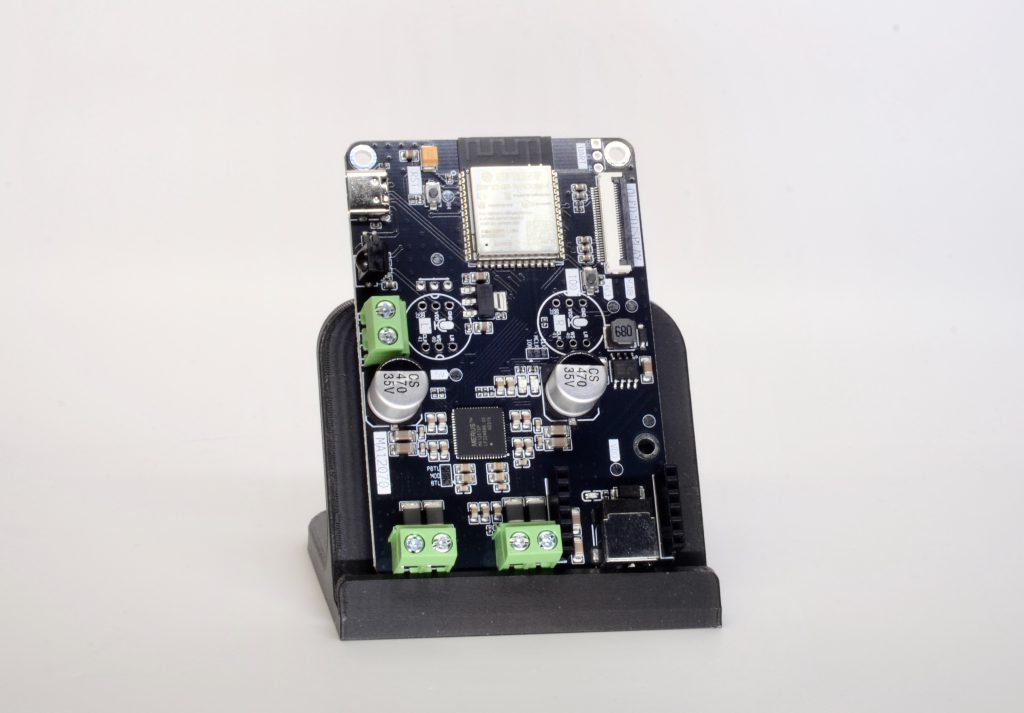
Loud-ESP32 and Loud-ESP32-Plus are handy, low-cost media streamer devices that can be paired with passive speakers. Loud-ESP32 uses a dual MAX98357 Hi-Fi DAC that will output up to 5W per speaker, so it can be powered by a standard USB-C wall charger. Loud-ESP32-Plus model hires much more powerful Infineon MA12070P DAC with up to 60W per channel. Due to the D-class amp, they are highly efficient yet high-quality audio streamers.
Use cases
Loud-ESP32 is a flexible, open-source audio platform designed to fit into both smart homes and custom audio projects.
- Smart Home Audio & TTS
Integrates with Home Assistant and Music Assistant for high-quality audio playback and text-to-speech announcements. Perfect for notifications, voice alerts, and whole-home audio driven by your smart home automations. - Multi-Room Audio with Snapclient
Use Loud-ESP32 as a Snapclient endpoint to create perfectly synchronized multi-room audio systems. Ideal for distributed music playback without proprietary lock-in. - Standalone Player with Squeezelite-ESP32
Run Squeezelite-ESP32 for a self-contained network audio player supporting Spotify Connect, AirPlay, and Logitech Media Server (LMS)— no external computer required. - Educational Projects & Teaching Platforms
A powerful tool for schools, universities, and technical education. Loud-ESP32 can be used to teach embedded systems, digital audio, networking, and open-source software — ranging from simple audio playback labs to advanced DSP, streaming, and real-time systems projects. - Research, Prototyping & Experimentation
Well-suited for rapid prototyping of audio devices, proofs-of-concept, and research projects involving DSP, low-latency streaming, wireless audio, or human-machine interaction. - A Foundation for Custom Products & DIY Builds
With all firmware and tooling fully open source, Loud-ESP32 is an ideal base for custom audio devices — whether you’re building a personal DIY project, a small production run, or a community-driven product.
Features
| ESP Audio Duo (discontinued) | Loud-ESP32 | Loud-ESP32-Plus * | |
|---|---|---|---|
| MCU | ESP32-Mini Module | ESP32-WROVER-N8R8 | ESP32-S3-WROOM-N8R8 | ESP32-WROVER-N8R8 | ESP32-S3-WROOM-N8R8 |
| DAC | Dual I2S DAC (MAX98357) with built-in D-Class amp | Dual I2S DAC (MAX98357) with built-in D-Class amp | Infineon MA12070P with built-in D-Class amp |
| Output (4Ω) | 2x 5W | 2x 5W | 2x 60W |
| Output (8Ω) | 2x 3W | 2x 3W | 2x 35W |
| Flash/PSRAM | 4MB/8MB | 8MB/8MB | 8MB/8MB |
| Connectivity | WiFi + BT4.2 + BLE | WiFi + BT4.2 + BLE + Ethernet | WiFi + BT4.2 + BLE + Ethernet |
| Power requirement | 5V from USB-C | 5V from USB-C | Generic power adapter 5..26V |
⚠️Loud boards will connect to passive speakers; you can’t use headphones or an external amp
💡Need to connect an external amp? Check out HiFi-ESP32 and Amped-ESP32
💡Need DSP capabilities? Check out Louder-ESP32
* Plus model is in testing and will be available soon
💡Looking for a more feature-packed version? Check out Loud Esparagus
Optional Peripherals
- 0.96″, 128 x 64 px OLED Screen
- External Wi-Fi Antenna
- WS2812B RGB LED
- IR reader
- W5500 Ethernet
Onboard PSRAM
Audio streaming requires proper buffering to work, even with the ESP32’s 500K of RAM; it is a challenging task. For that reason, all Louder-ESP32 board versions have an 8 MB PSRAM chip onboard, connected via a high-speed interface.
Case
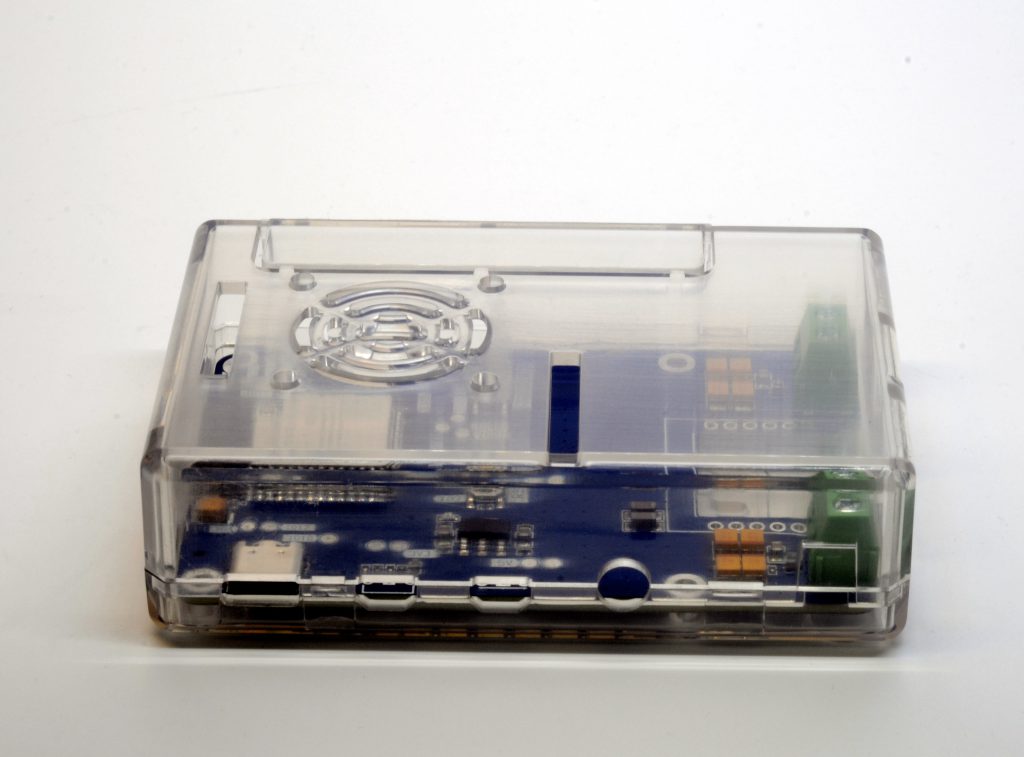
Loud-ESP32 and Loud-ESP32-Plus boards are mechanically compatible with Raspberry Pi 4 cases, and they are very easy to source
Optional Ethernet
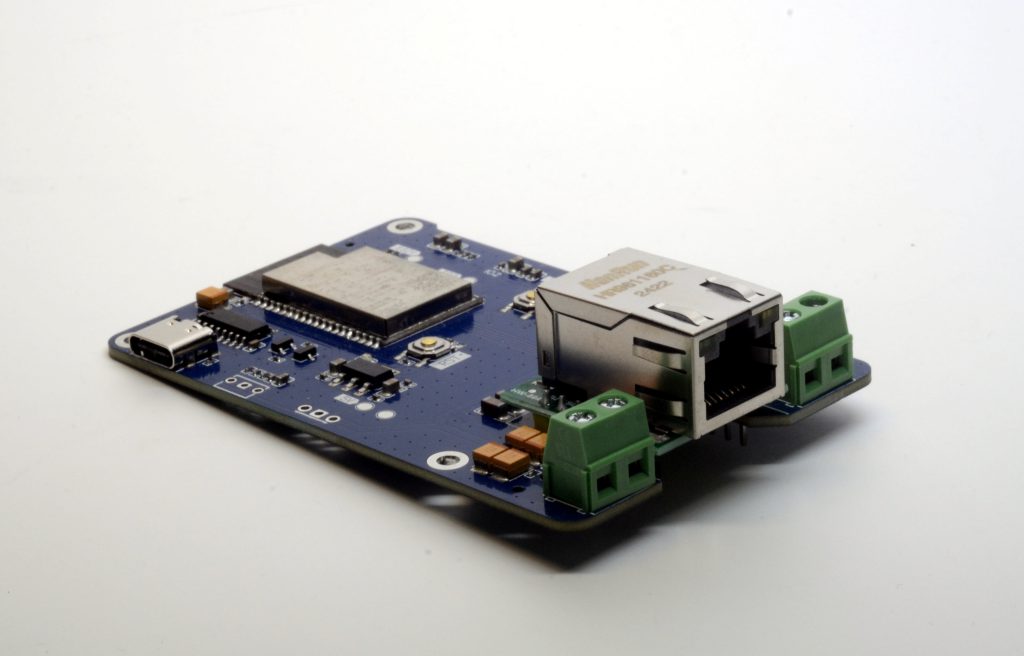
Streaming high-bitrate audio over WiFi can be problematic in congested areas, so every board has a header that allows soldering in the W5500 SPI Ethernet module, which is very easy to source as well. The only downside is that with the module installed board will not fit the case unless it is impoved to accommodate extra height.
Firmware
- Home Assistant
Start from the web-installer, as soon as you configure WiFi, the boards will be discovered by the ESPHome add-in automatically. Dedicated configs can be found in the documentation for simple and stable media-player, experimental sendspin protocol, and experimental snapclient component - Squeezelite-ESP32
Flash directly from your browser using the web-installer, configure WiFi using Hotspot (default password: squeezelite). Don’t forget to exit Recovery mode when configured. - Snapclient
Flash directly from your browser using the web-installer, as soon as you configure the WiFi board, it will discover the snapserver automatically - Snaplient (edge)
Developer’s version of the snapclient, less stable and more feature-rich for those who cannot wait for new features to be released. Installed via web-installer, similar to standard snapclient - Your own software
Use Arduino IDE or Platformio IDE and the provided software samples
Using with Home Assistant
Both HiFi Esparagus versions were created specifically to be used with Home Assistant via ESPHome integration. For both boards, rich configs were pre-created with hardware configuration for common use cases. These include
- media_player component for simple and robust media playback and TTS announcements (with ducking effect)
- Sendspin media player – new experimental protocol for multi-room sync with media controls and more
- An experimental snapclient component that allows near-perfect multi-room sync and seamless integration with Music Assistant
- Another snapclient fork with an implemented 15-band software equalizer and a rich set of EQ presets
- Voice assist config for S3-based boards, allowing local voice-controlled assist and automation
Configurations are being actively maintained and upgraded, new experimental components added for you to test and enjoy
Documentation
Both software and hardware are fully open-sourced and can be found on the project’s GitHub. You can follow the project updates at Hackaday
Where to buy
You may support our work by ordering this product at Tindie and Elecrow
Sponsorship & Community Support
If you’re working on an open-source project, an educational initiative, or any pro-bono/volunteer effort, feel free to reach out for sponsorship details. I’ll do my best to provide discounts or even free boards.
Custom Design & Consultation
If you’re interested in a custom design based on or inspired by my boards, I also offer contract design work and consultation when needed.