Loud Raspberry Hat 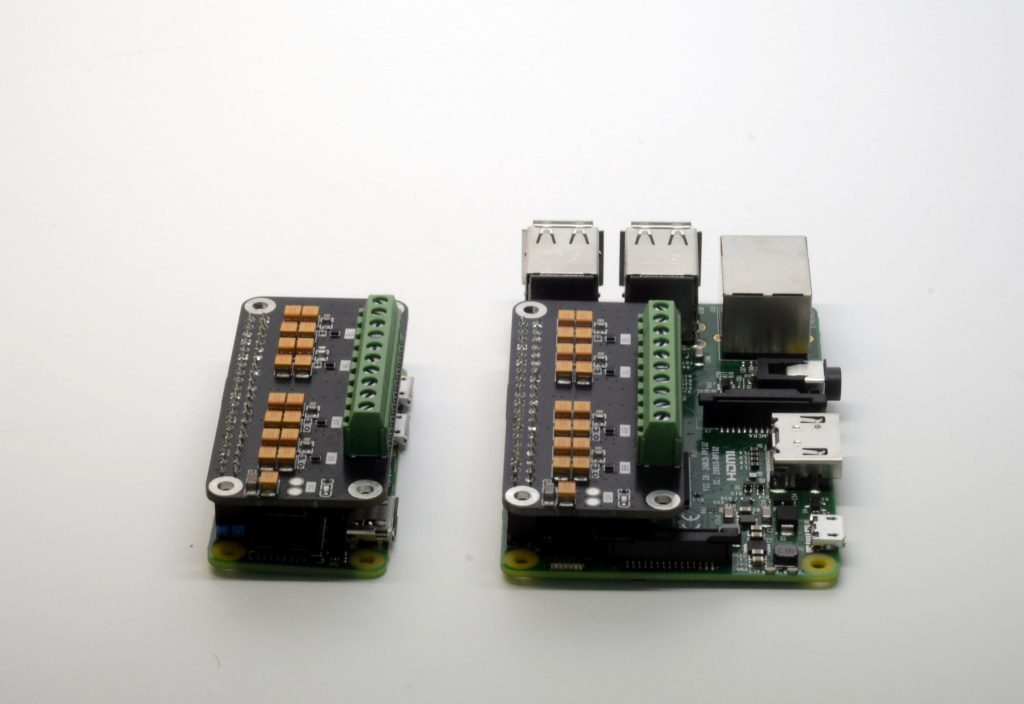
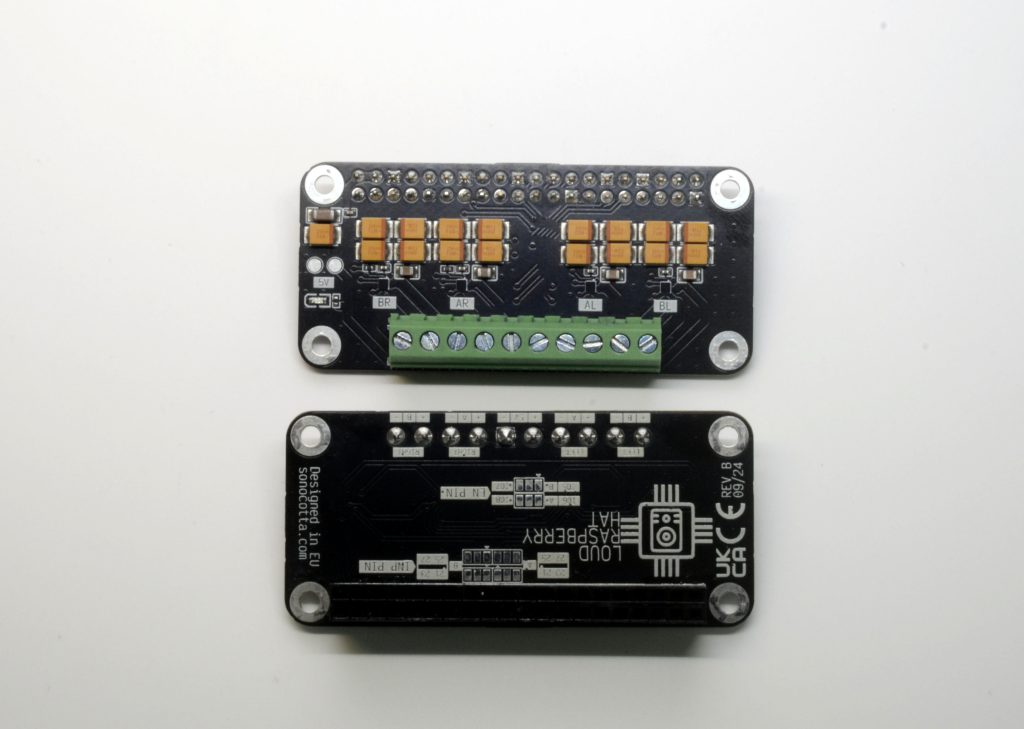
Loud Raspberry Hat (2X)
What is it?
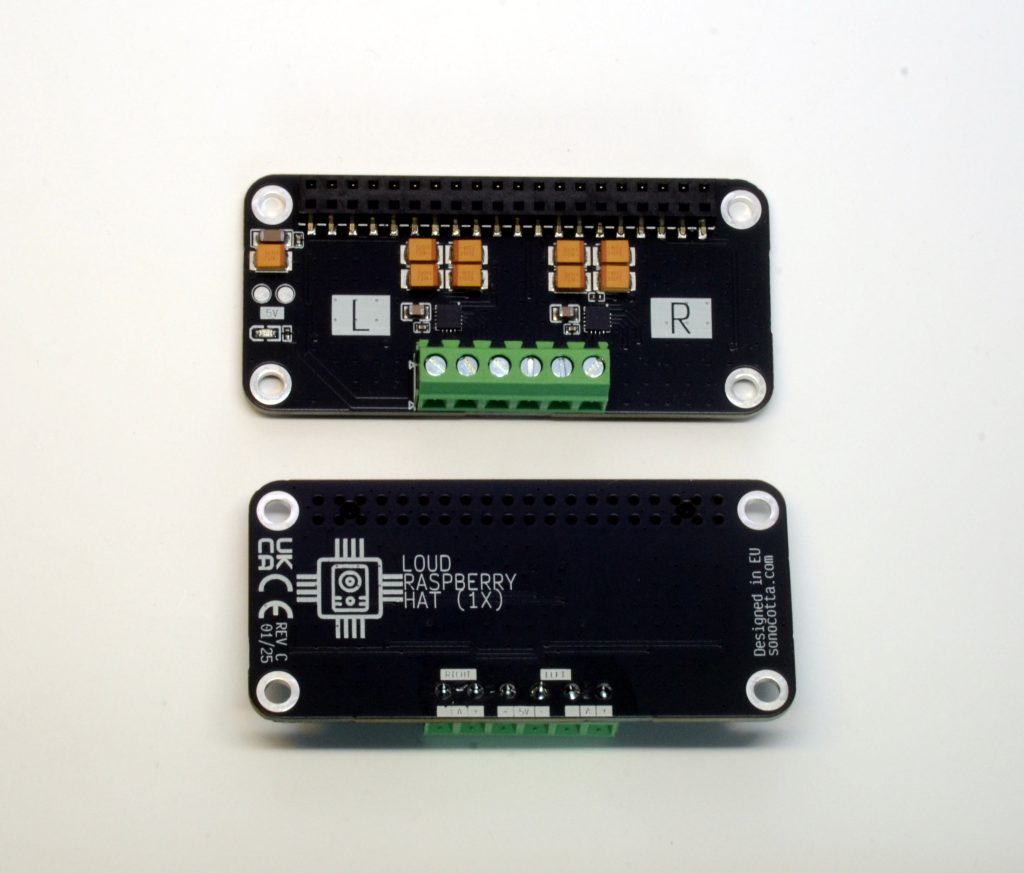
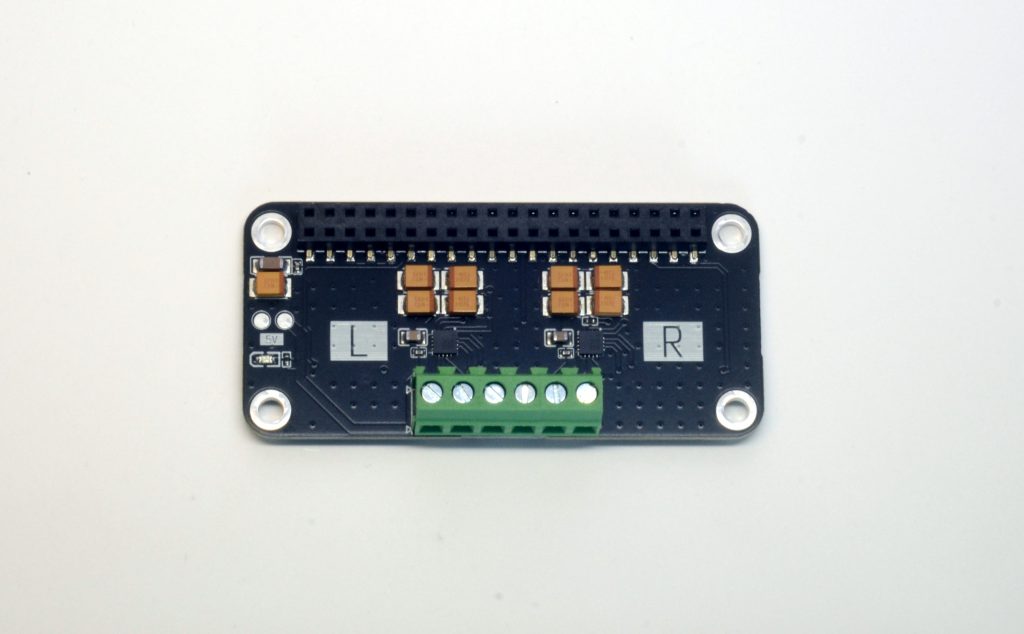
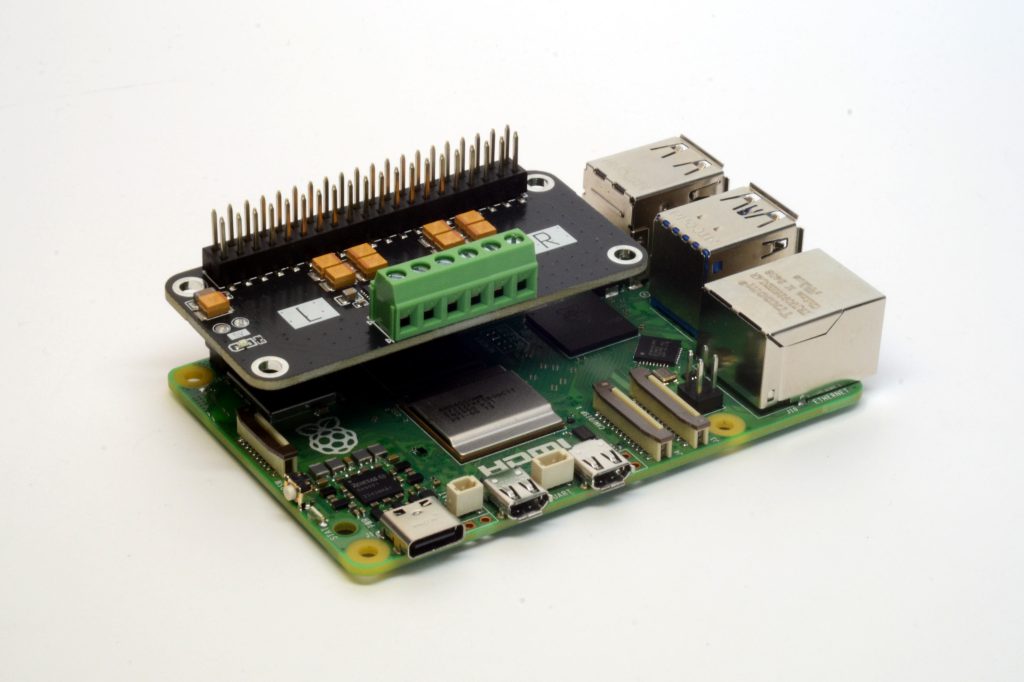
Loud Raspberry Hat uses MAX98357A DAC in a cost-efficient Hat form. The base version can be used with any Raspberry Pi, while Raspberry Pi 5 users can use two pairs of speakers independently on the 2X version. The hat will pull the juice from the Pi’s 5V line, or power the Pi itself using screw connectors, so you can make sure enough power is delivered to both boards.
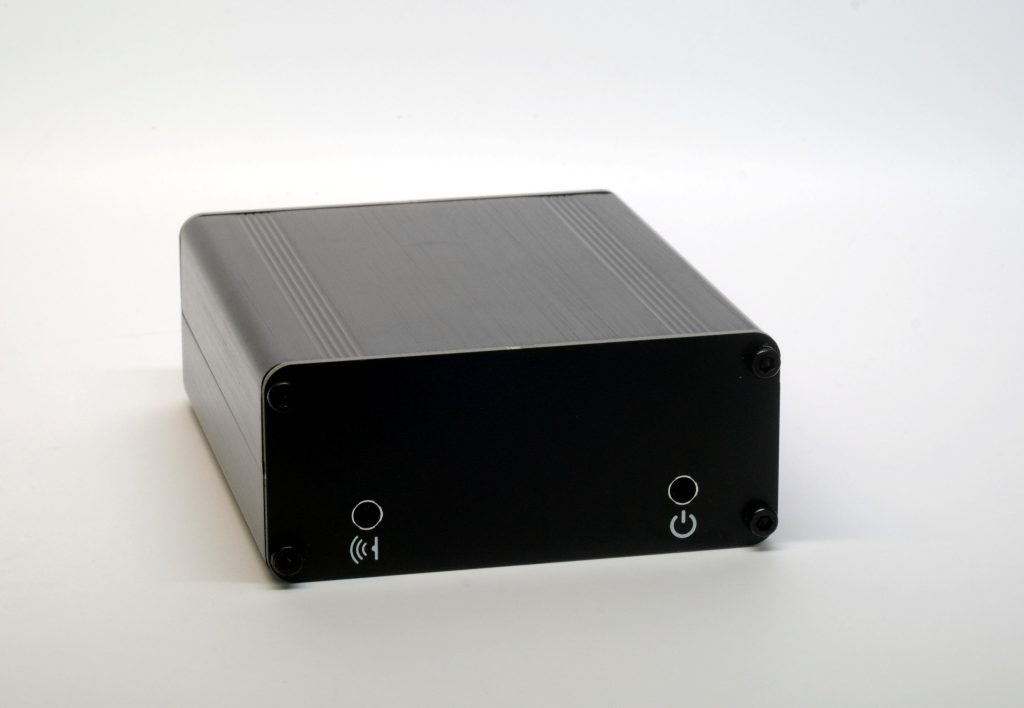
Loud Raspberry Media Center front 
Loud Raspberry Media Center back
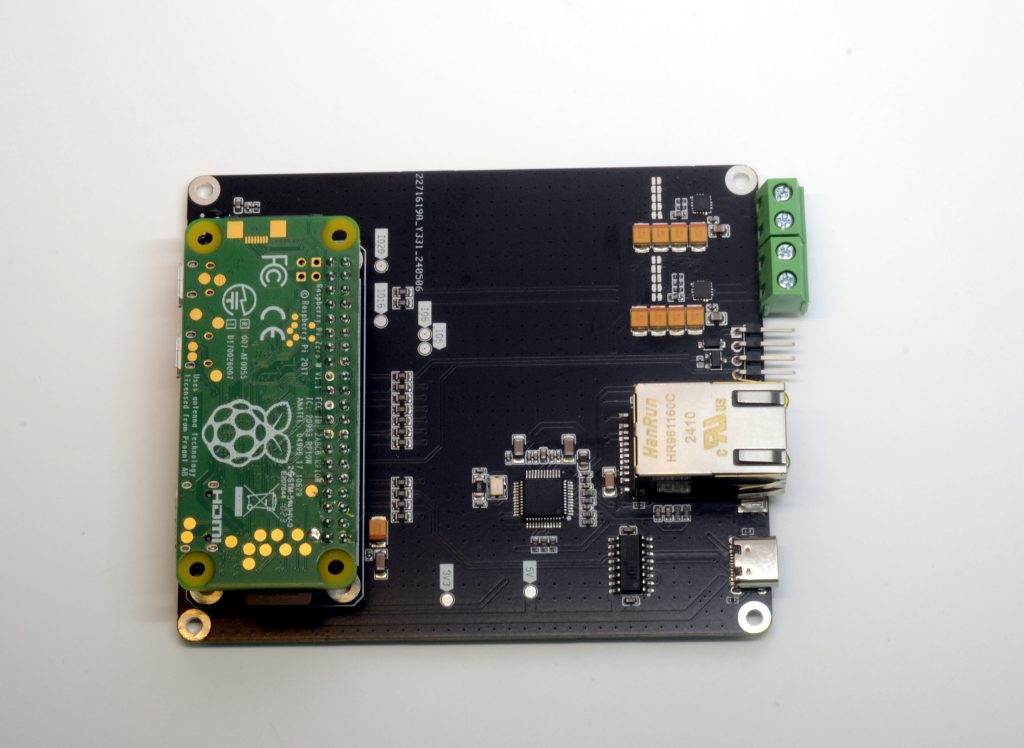
The Loud Raspberry Media Center is a cased and feature-packed version of the board that is designed specifically for Raspberry Pi Zero boards, adding onboard Ethernet, IR reader, and RGB LED indication. With a minimalistic but functional design inspired by commercial audio gear, it offers a more professional look and feel.
Use cases
Loud Raspberry Hat is a flexible, open-source audio platform designed to fit into both smart homes and custom audio projects.
- Smart Home Audio, TTS & Automation Node. Integrates with Home Assistant and Music Assistant for high-quality playback, text-to-speech, and event-driven announcements. Functions as both an audio endpoint and a networked automation node for sensors, triggers, and smart home workflows.
- Multi-Room Audio Infrastructure. Use Loud Raspberry Hat as a Snapclient server and endpoint for perfectly synchronized distributed audio. Ideal for open, vendor-neutral whole-home or commercial audio systems.
- Standalone Network Player & Streaming Hub. Run LMS/Squeezelite for a self-contained streaming device supporting Spotify Connect, AirPlay, and Logitech Media Server — no external computer required.
- Embedded Audio Processing & DSP Platform. Execute real-time digital signal processing, filtering, effects, or audio analysis directly on-device. Suitable for smart speakers, alert systems, acoustic sensing, and custom audio interfaces.
- Networked Sensor & Interface Controller. Combine audio output with GPIO control, sensors, buttons, displays, or actuators. Ideal for interactive installations, smart appliances, voice feedback devices, or industrial status systems.
- Educational Platform for Systems & Networking. A practical teaching platform for embedded Linux-style workflows without full SBC overhead — covering networking, streaming protocols, real-time processing, IoT architectures, and open-source audio systems.
- Rapid Prototyping for Connected Products. Designed for fast iteration of networked hardware products — from smart audio devices and notification systems to interactive kiosks and connected consumer electronics.
- Open Platform for Custom Products & DIY Builds. With fully open firmware and tooling, Loud Raspberry Hat provides a flexible foundation for personal projects, research platforms, or commercial device development.
Features
| Loud Raspberry Hat | Loud Raspberry Hat (2X) | Loud Raspberry Media Center | |
| Compatible with | Every Pi | Raspberry Pi 5 | Raspberry Pi Zero (W), Raspberry Pi Zero2 W |
| DAC | Dual MAX98357 DAC with built in D-Class amp | Quadruple MAX98357 DAC with built in D-Class amp | Dual MAX98357 DAC with built in D-Class amp |
| Output | 5W per channel on 4Ω load (3W on 8Ω) | 5W per channel on 4Ω load (3W on 8Ω) | 5W per channel on 4Ω load (3W on 8Ω) |
| IR input | no | no | yes |
| RGB LED | no | no | yes |
| Onboard Serial Bridge | no | no | yes |
| Wizznet W5500 Ethernet | no | no | yes |
| Mechanical dimensions (WxHxD) | 65mm x 30mm x 15mm | 65mm x 30mm x 15mm | 88mm x 38mm x 100mm |
| Power requirement | 5V from the host (up to 2A) or 5V from screw connector (powering host) | 5V from the host (up to 4A) or 5V from screw connector (powering host) | 5V USB-C power adapter (up to 3A) |
⚠️Loud boards will connect to passive speakers; you can’t use headphones or an external amp
💡Need to connect an external amp? Check out the HiFi Raspberry Hat and the Amped Raspberry Hat
💡Need DSP capabilities? Check out the Louder Raspberry Hat
How to use
Loud Raspberry boards are compatible with HiFi-Berry boards, so in most of the cases you just need to select the HiFi-Berry-DAC configuration
dtoverlay=hifiberry-dacTo use the full DAC potential, you may want to enable the dynamic DAC-enable feature, shutting down the DAC when no audio is playing to save power and reduce speaker idle noise
dtoverlay=max98357a,sdmode-pin=4In terms of the optional peripheral, it is supported by most distributions, and can be enabled as simply as a few lines in the /boot/formware/config.txt
dtoverlay=gpio-ir,gpio_pin=23
dtoverlay=w5500
Firmware
Works with Volumio, PiCorePlayer, HiFiBerryOS, Moode, Moopibox, or bare Raspbian OS.
The project repository provides a few examples with build instructions, including Volumio setup instructions, among others.
Documentation
Both software and hardware are fully open-sourced and can be found on the project’s GitHub. You can follow the project updates at Hackaday
Where to buy
You may support our work by ordering this product at Tindie and Elecrow
- Loud Raspberry Hat at Tindie ($15 MRSP, $12 at volume)
- Loud Raspberry Hat (2X) at Tindie ($20 MRSP, $17 at volume)
- Loud Raspberry Media Center at Tindie ($49 MRSP, $45 at volume)
Sponsorship & Community Support
If you’re working on an open-source project, an educational initiative, or any pro-bono/volunteer effort, feel free to reach out for sponsorship details. I’ll do my best to provide discounts or even free boards.
Custom Design & Consultation
If you’re interested in a custom design based on or inspired by my boards, I also offer contract design work and consultation when needed.